Food as
medicine,
delivered
to your door.
Whole grains simmered low. Root vegetables roasted until their sugars caramelize. Fermented sides that hum with weeks of patient culture. Cooked by season and philosophy — for bodies that need more than food.
Reserve Your Seat at the Table
Taste it before
you open the box.
Each meal is described not by its nutritional label but by what it asks of your senses — because that is how healing begins.
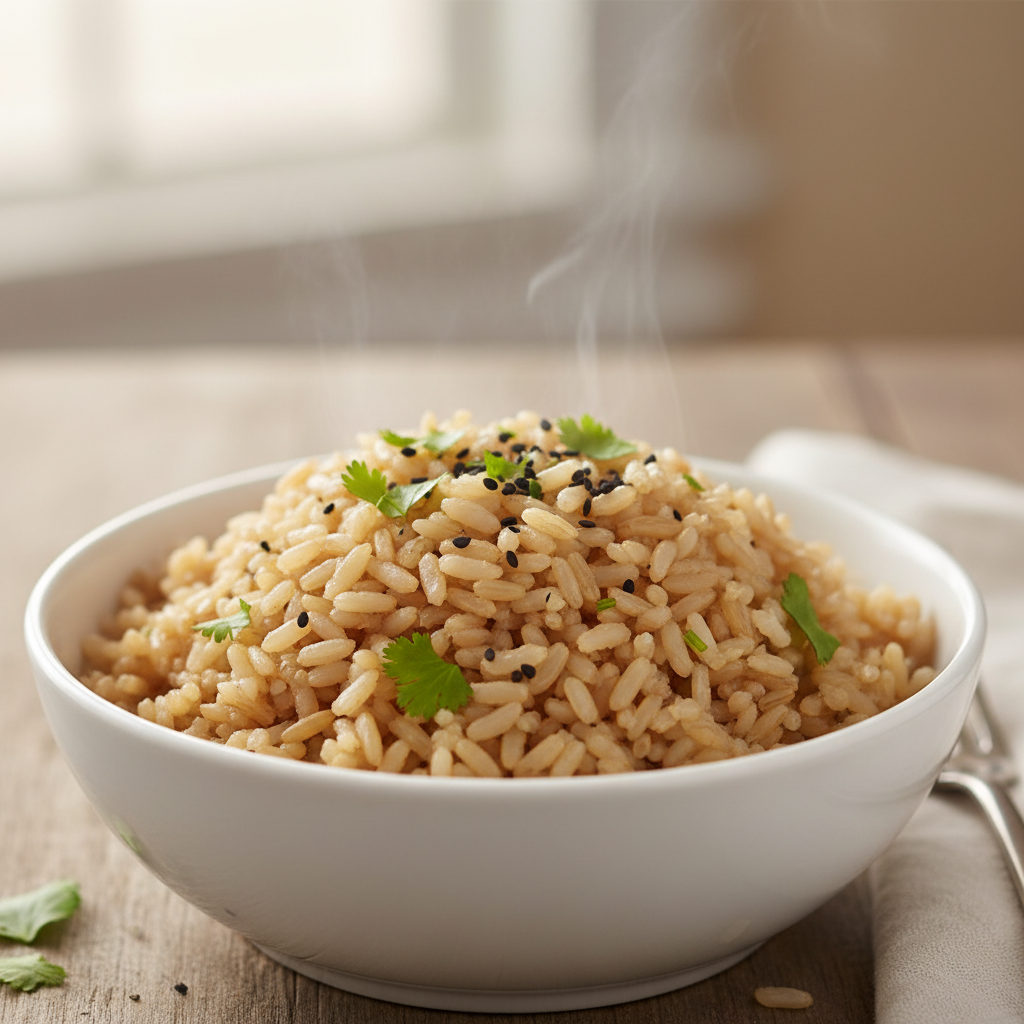
Soft Brown Rice Porridge with Sesame Gomasio
The box opens and the first thing you smell is warm grain — not the sharp, starchy smell of quick oats but something deeper, almost earthy, like the inside of a wooden bowl that has been used every morning for thirty years. The porridge is the color of pale straw, and when you dip a spoon in, it yields without resistance.
Short grain brown rice is the cornerstone of macrobiotic practice. Its compact shape holds the most concentrated life force (ki). Slow simmering breaks the outer bran into a soft, mucilaginous quality that coats and soothes the intestinal lining — essential for autoimmune and postpartum recovery.
A pressure cooker shortcut would produce the same carbohydrate profile but none of the therapeutic quality. Two hours of gentle simmering allows the grain to fully expand, releasing natural sugars slowly and creating a broth that is itself nourishing.
Porridge is the universal morning medicine. In winter it warms the center; in summer it is thinned and served at room temperature. The body recognizes it as safe — and safety is the first requirement of healing.
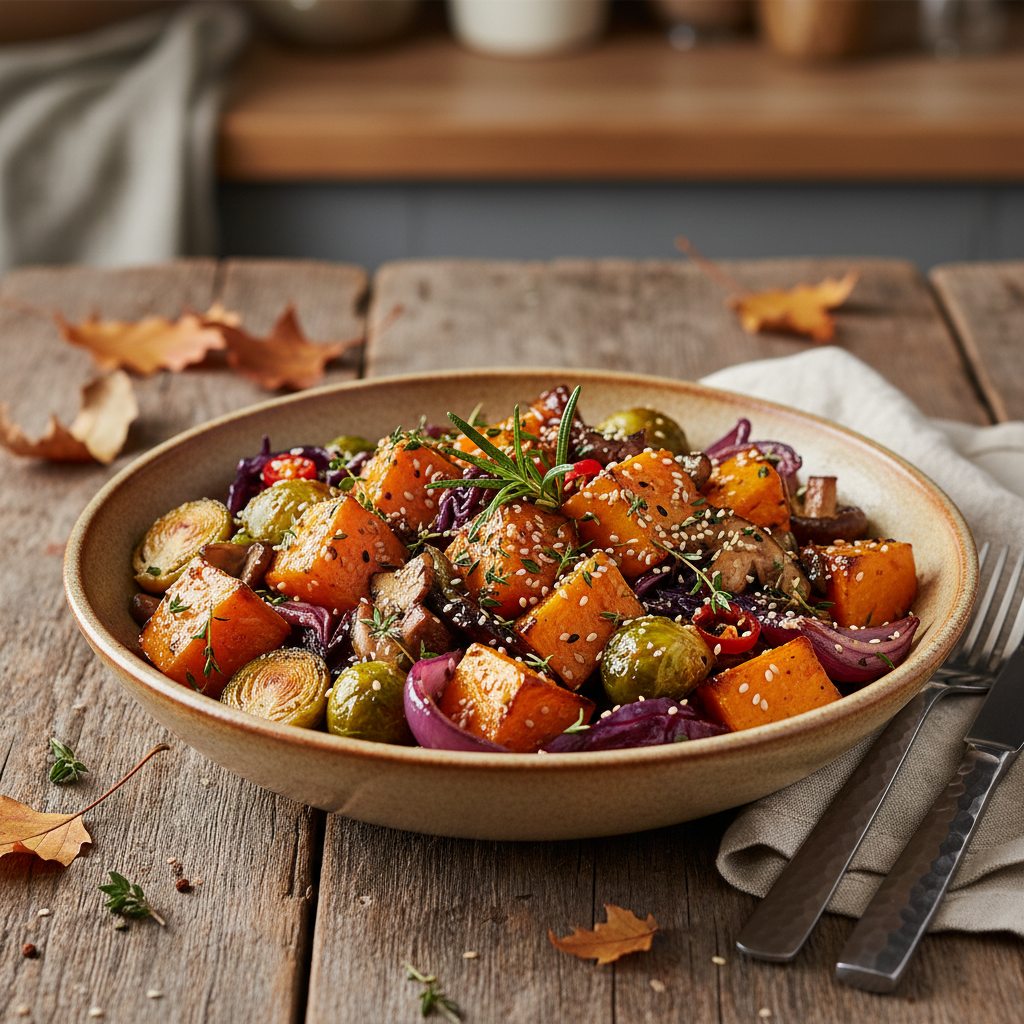
Millet & Roasted Kabocha Grain Bowl with Tahini Miso Dressing
Open the container and a cloud of sweet, nutty steam rises — the kabocha has been roasted until its flesh is almost jammy, and the millet underneath is golden-yellow, each grain separate and slightly chewy. The tahini miso dressing smells of fermented depth and toasted sesame, and when you drizzle it over the bowl, it pools in the hollows of the squash like honey.
Millet is the only alkaline-forming grain. In macrobiotic theory it strengthens the stomach and spleen — the digestive organs most depleted by stress, autoimmune flares, and the enormous metabolic work of postpartum recovery. Its golden color signals its affinity with the Earth element and the center of the body.
Dry-toasting before cooking removes surface moisture and develops a nutty complexity that plain boiling cannot achieve. The subsequent steaming ensures each grain cooks evenly without turning dense or pasty.
Autumn calls for sweet, grounding foods. Kabocha squash is the most yang of the winter squashes — its flesh is dense and warming, not watery. Combined with millet, this bowl is designed to anchor the body as the energy contracts inward with the season.
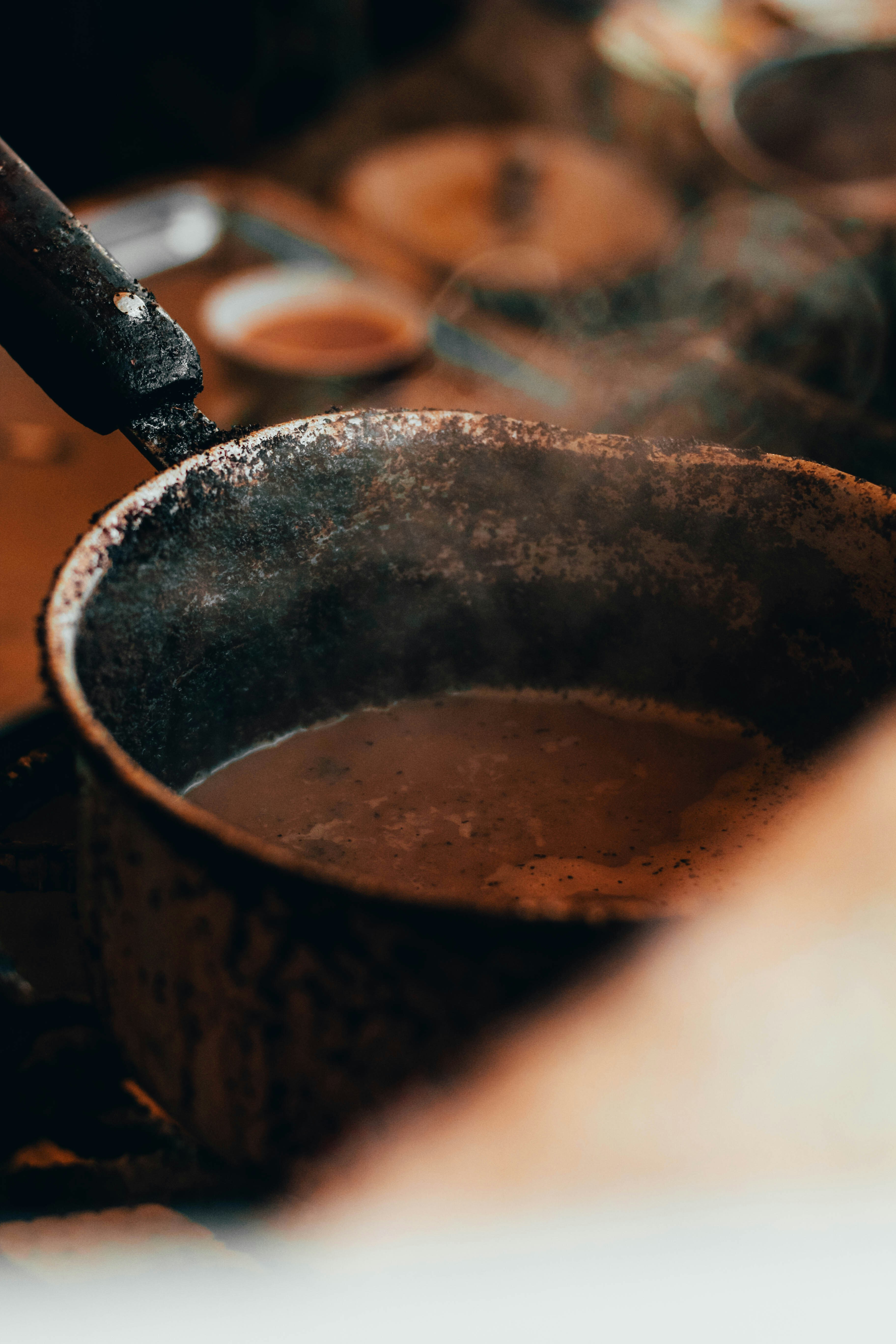
Nishime Long-Cooked Root Vegetable Stew
This is the smell of a kitchen in late October — burdock root and lotus root simmering with kombu in a covered pot, the steam barely escaping. When you lift the lid of the container, the fragrance is deeply savory and sweet at once, like the earth after rain. The vegetables have been cooked until they are tender all the way through, their edges slightly caramelized where they touched the bottom of the pan.
Nishime is not a grain dish — it is a cooking method that concentrates the natural sweetness and minerals of root vegetables without adding water. Kombu sea vegetable provides glutamic acid (natural MSG) and an extraordinary mineral profile: calcium, iodine, iron, and trace minerals that replenish what illness and childbirth deplete.
Waterless cooking is one of the most important techniques in macrobiotic practice. Vegetables are layered in a heavy pot with only their own moisture and a splash of tamari. The lid is sealed and the heat is kept very low — sometimes for 45 minutes. The result is a dish with a concentrated, almost medicinal quality.
Root vegetables are the most yang foods in the plant kingdom. In winter, when the body needs to conserve warmth and energy, roots provide the deep, contracting energy that sustains. Burdock in particular is valued for its blood-cleansing properties.
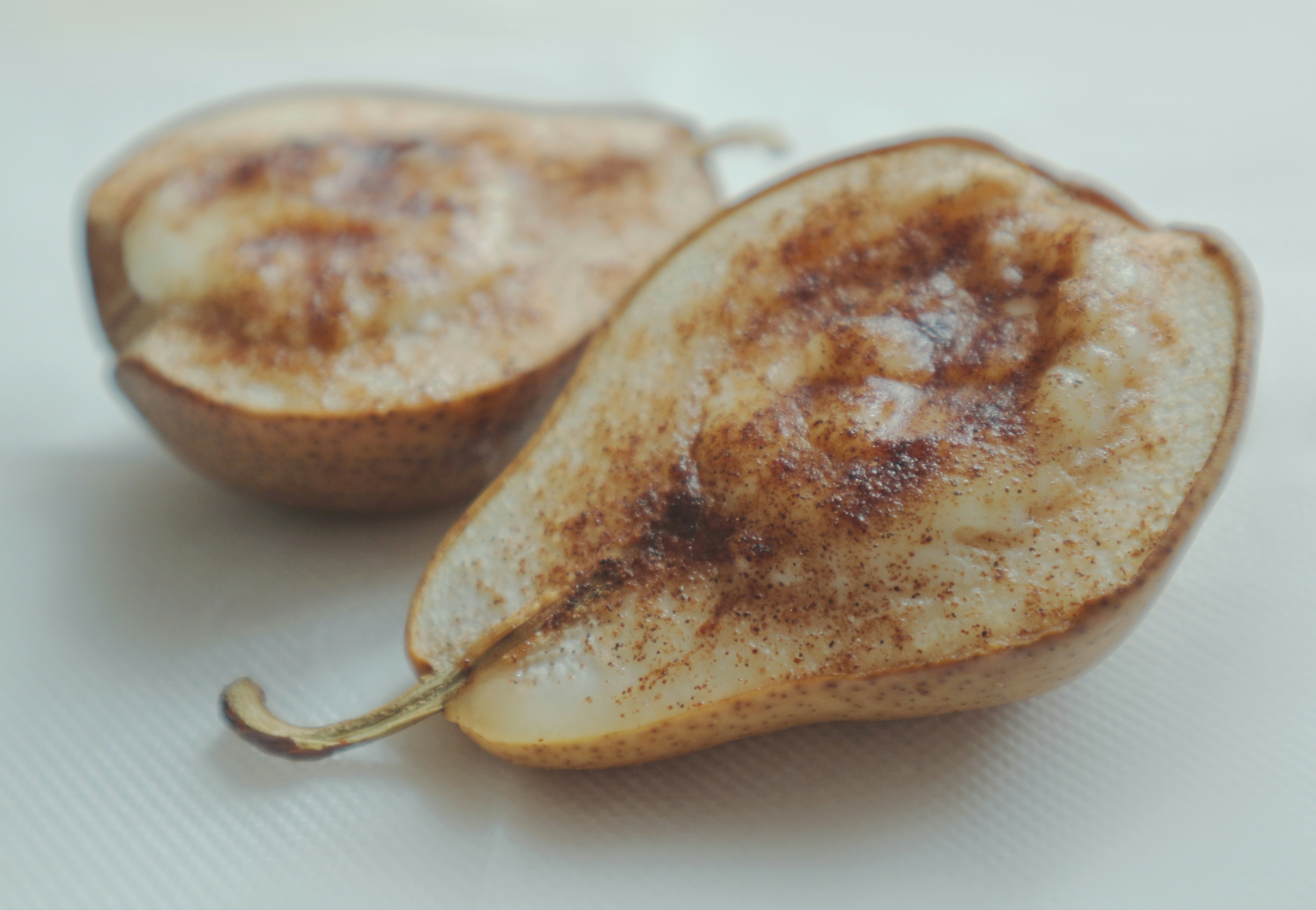
Poached Pear with Kuzu Sauce & Cinnamon
The pear has been poached in apple juice until it is translucent at the edges and the color of old amber. The kuzu sauce is poured over it warm — thick and glossy, almost like a gentle gravy but sweet, faintly spiced with cinnamon. When you eat it, the pear yields completely, and the kuzu dissolves on the tongue, leaving a warmth in the center of the chest that lasts.
Kuzu (kudzu root) is not a grain but a medicinal starch used in macrobiotic practice specifically for its strengthening effect on the intestines and its alkalizing quality. Unlike arrowroot or cornstarch, kuzu has a long history of use in Japanese herbal medicine for digestive weakness and fatigue.
Poaching fruit concentrates its natural sugars without adding anything. The kuzu sauce requires patience — it must be dissolved in cold liquid first, then stirred constantly over low heat until it transforms from cloudy to translucent. Rushing this step produces lumps; patience produces silk.
Sweetness in macrobiotics is not dessert — it is medicine for the spleen. Gentle fruit sweetness with warming spice is prescribed for the transition between autumn and winter, when the digestive fire needs support.
"You have just eaten a full day — and you have not yet left your chair."
Reserve Your Seat at the Table

Cooked by season
and philosophy.
Nourish was founded by Keiko Tanaka, a macrobiotic counselor who spent twelve years cooking for individuals in healing from cancer, autoimmune disease, and chronic fatigue. What she found was that the people who recovered most fully were the ones who ate this way every single day — and most of them could not sustain that alone.
The kitchen exists to hold that practice for you. We cook the way a dedicated macrobiotic home cook would — not faster, not cheaper, not more convenient. Exactly the same. Just in larger quantities, so you do not have to.
Download the Winter Meal Guide
7 days of macrobiotic meals calibrated for the cold months — with sourcing notes and cooking times.
Whole grains as center
Every meal is built around a whole grain — not as a side, not as a substrate, but as the energetic anchor. Brown rice, millet, barley, oat groats. The grain determines the meal's character.
Seasonal & local sourcing
We cook what is ready. Not what is available year-round at the warehouse. When kabocha appears at the farm gate in October, we roast kabocha. When spring nettles emerge, we blanch nettles.
Fermentation as medicine
Our miso is aged three years minimum. Our pickles are lacto-fermented, not vinegar-brined. Our tamari is traditionally brewed. Fermentation is not a technique — it is a philosophy of patience.
Practitioner collaboration
Many of our clients come through referrals from acupuncturists, naturopaths, and integrative oncologists. We read the protocols. We adapt the menus. We report back.
Three tables.
One kitchen.
Nourish was built for people whose relationship with food is not casual — it is therapeutic, philosophical, or both. We cook for bodies in transition.

Your protocol deserves a kitchen that reads it.
You are following a practitioner's guidance — perhaps AIP, GAPS, or a macrobiotic protocol from your integrative oncologist. The diet is clear. The cooking is not. We receive your protocol, adapt our weekly menu, and deliver meals that are not merely "healthy" but specifically constructed for your condition.
"I have Hashimoto's and my naturopath recommended a strict macrobiotic protocol. I could cook one or two days a week. Nourish filled the rest. My antibodies dropped 40% in six months."
— Meredith C., Portland OR
The most important 40 days. Fed properly.
The postpartum body has just done something extraordinary. Traditional cultures around the world prescribe warming, easily digestible, mineral-dense foods for the weeks after birth. We cook that food. Soft grains, long-cooked soups, root vegetables, and miso — delivered to your door so you can rest, nurse, and heal.
"I had my second baby in January. My midwife recommended Nourish for the first six weeks. I ate better postpartum than I had in years. My milk came in strong and I recovered faster than after my first."
— Daniela R., Burlington VT
You know what you need. We just cook it.
You have practiced for years. You understand yin and yang, the five transformations, the importance of chewing. What you are tired of is the cooking. Not because you have lost faith — but because life is full, and standing at the stove for two hours every night is no longer possible. We are your kitchen.
"I have been macrobiotic for twenty-two years. Nourish is the first delivery service I have trusted. The miso is real. The grains are properly cooked. They understand why the cooking method matters."
— Thomas B., Asheville NCCome to the
table.
A free 90-minute virtual tasting event. We cook live. You follow along with the ingredients we send you in advance, or you simply watch and smell through the screen. Either way, you leave knowing what macrobiotic food actually tastes like — not the theory, the food.
Reserve Your Seat at the Table
Free · 40 seats available · No preparation required